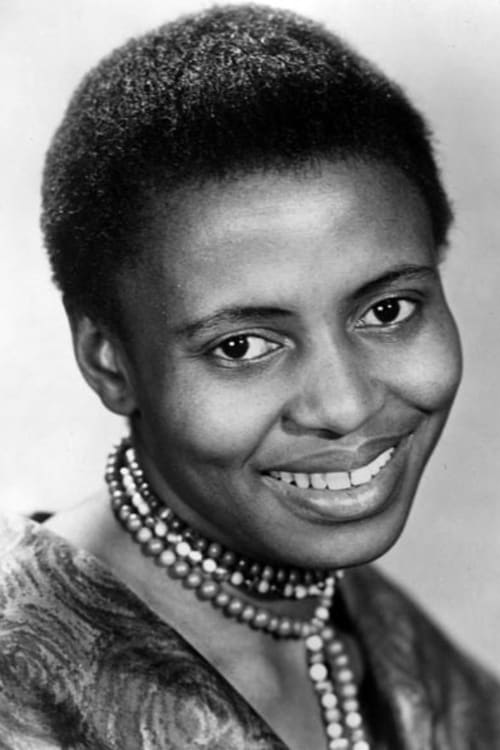
Miriam Makeba
Nota per
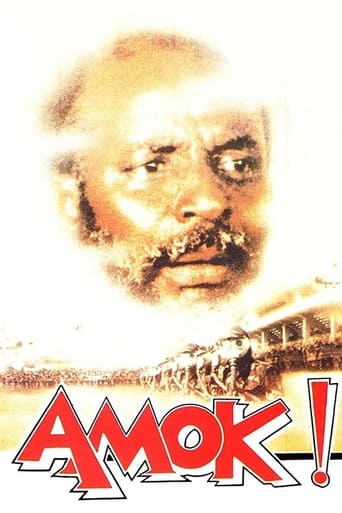

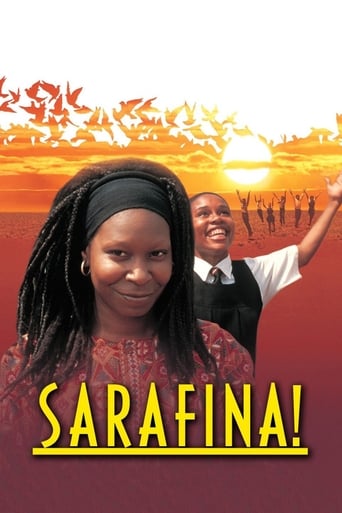
Miriam Makeba figura negli archivi come attrice di cui il pubblico può verificare i crediti nelle banche dati. Il suo arco di attività documentato è di 67 anni. Il pubblico che la conosce ci è arrivato quasi sempre da 'Quando eravamo re'. Il primo titolo in cui compare è del 1959.
Miriam Makeba
4 Film
Miriam Makeba figura negli archivi come attrice di cui il pubblico può verificare i crediti nelle banche dati. Il suo arco di attività documentato è di 67 anni. Il pubblico che la conosce ci è arrivato quasi sempre da 'Quando eravamo re'. Il primo titolo in cui compare è del 1959.

Ultimi Trailer

Guarda il trailer
Amandla! A Revolution in Four-Part Harmony
Domande Frequenti
Miriam Makeba è ancora viva?
Miriam Makeba è morto/a il 10 novembre 2008 all'età di 76 anni.
Quali sono i ruoli più conosciuti di Miriam Makeba?
Miriam Makeba è noto soprattutto per Quando eravamo re, Sarafina! - Il profumo della libertà, Africa in crisi.
In quanti film ha recitato Miriam Makeba?
In 49 anni di carriera (dal 1959), Miriam Makeba ha recitato in 3 film e 0 serie.
Qual è stato il primo film di Miriam Makeba?
La carriera di Miriam Makeba è iniziata con Africa in crisi (1959).
Qual è il film o la serie più recente di Miriam Makeba?
L'opera più recente di Miriam Makeba è Amandla! A Revolution in Four-Part Harmony, uscita il 21 settembre 2002.




Miriam Makeba
1932-03-04 · Prospect Township, near Johannesburg, Sudafrica
Zenzile Miriam Makeba (4 March 1932 – 9 November 2008), nicknamed Mama Africa, was a South African singer, songwriter, actress, and civil rights activist. Associated with musical genres including Afropop, jazz, and world music, she was an advocate against apartheid and white-minority government in South Africa.
Born in Johannesburg to Swazi and Xhosa parents, Makeba was forced to find employment as a child after the death of her father. She had a brief and allegedly abusive first marriage at the age of 17, gave birth to her only child in 1950, and survived breast cancer. Her vocal talent had been recognized when she was a child, and she began singing professionally in the 1950s, with the Cuban Brothers, the Manhattan Brothers, and an all-woman group, the Skylarks, performing a mixture of jazz, traditional African melodies, and Western popular music. In 1959, Makeba had a brief role in the anti-apartheid film Come Back, Africa, which brought her international attention, and led to her performing in Venice, London, and New York City. In London, she met the American singer Harry Belafonte, who became a mentor and colleague. She moved to New York City, where she became immediately popular, and recorded her first solo album in 1960. Her attempt to return to South Africa that year for her mother's funeral was prevented by the country's government.
Makeba's career flourished in the United States, and she released several albums and songs, her most popular being "Pata Pata" (1967). Along with Belafonte she received a Grammy Award for her 1965 album An Evening with Belafonte/Makeba. She testified against the South African government at the United Nations and became involved in the civil rights movement. She married Stokely Carmichael, a leader of the Black Panther Party, in 1968. As a result, she lost support among white Americans. Her visa was revoked by the US government when she was traveling abroad, forcing her and Carmichael to relocate to Guinea. She continued to perform, mostly in African countries, including at several independence celebrations. She began to write and perform music more explicitly critical of apartheid; the 1977 song "Soweto Blues", written by her former husband Hugh Masekela, was about the Soweto uprising. After apartheid was dismantled in 1990, Makeba returned to South Africa. She continued recording and performing, including a 1991 album with Nina Simone and Dizzy Gillespie, and appeared in the 1992 film Sarafina!. She was named an FAO Goodwill Ambassador in 1999, and campaigned for humanitarian causes. She died of a heart attack during a 2008 concert in Italy.
Makeba was among the first African musicians to receive worldwide recognition. She brought African music to a Western audience, and popularized the world music and Afropop genres. She also made popular several songs critical of apartheid, and became a symbol of opposition to the system, particularly after her right to return was revoked. Upon her death, former South African President Nelson Mandela said that "her music inspired a powerful sense of hope in all of us." ...
Source: Article "Miriam Makeba"